

How to Knit Cables Stitches: A Beginners Guide
I know that knitting cables looks intimidating. The stitches make no sense. Do I need a cable needle? But wait, what even is a cable needle?
These are all questions I once asked myself when I decided to throw myself back into knitting years ago, and attempt my first cable knit project. Now years later, knitting cables is by far my favourite knitting technique.
I’m going to dive into all those questions above, plus share some FREE cable knit patterns so you can try knitting cables TODAY!
Knitting Cables: What You Need to Know
The process of knitting cables is that you are moving the stitches around without dropping them.
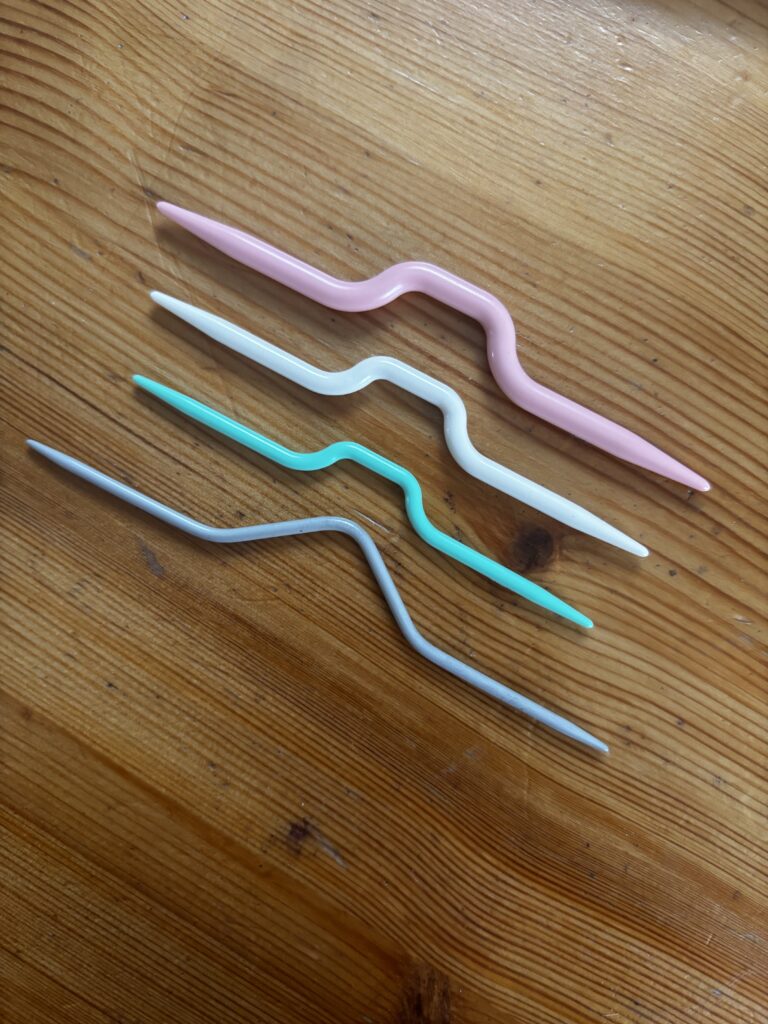
Knitting cable stitches involves slipping stitches off the needle and onto either a cable needle (shown below) or anything that is able to hold your stitches while you knit.
Holding the stitches in different ways will create different cables as it alters the direction of the knitting.
The only supplies you will need is either an extra knitting needle or a cable stitch needle. I prefer having a cable stitch needle as it’s easier for myself and its just what I prefer.
A cable knit isn’t necessarily something you need, but it makes the process so much easier.
How to Knit Cables
My favourite technique for knitting is knitting cables. It’s an intricate detail in a garment and it makes the knitting experience even more enjoyable. Often when I knit up a cable sweater or accessory and then move onto something more boring like just stockinette, I often get bored with the project.
Knitting cables makes knitting for fun.
When knitting cables, having an extra needle on hand makes the process easier. I’d advise using a DPN (double pointed needle) or a cable stitch needle. Using a straight knitting needle offers only 1 way on or off the needle and this could cause twisted switches.
Here, we are knitting up a simple cable stitch.
Taking the cable stitch needle, slip the stitches onto the needle. Depending on the knitting pattern, hold the stitches behind or in the front of the project.
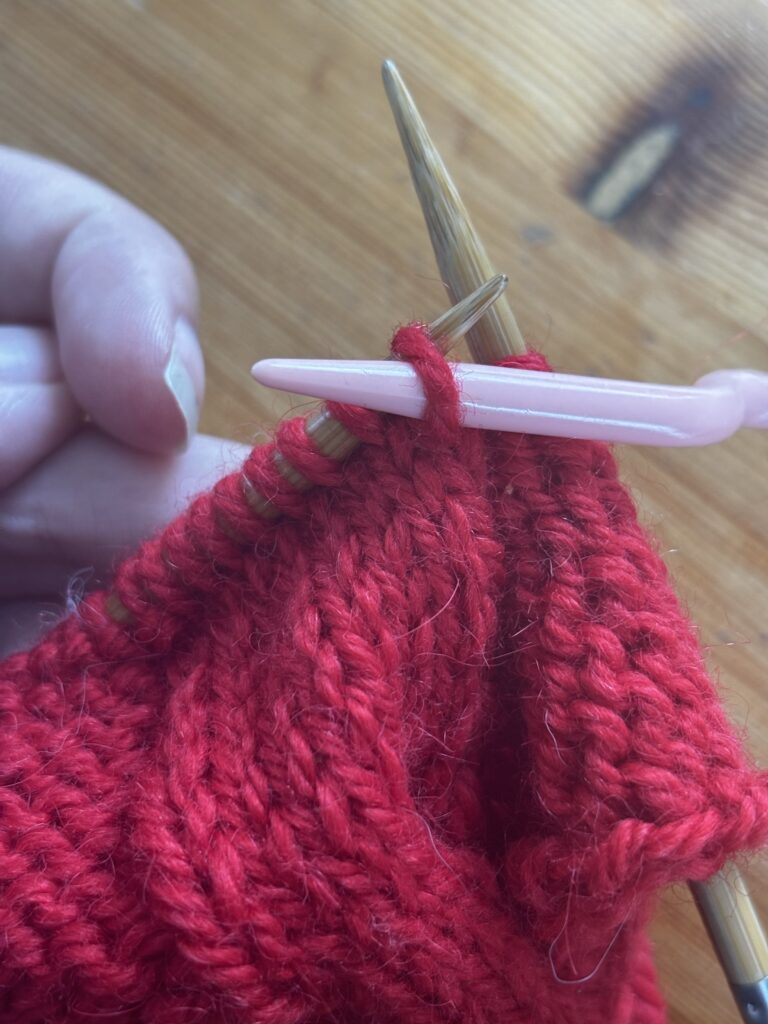
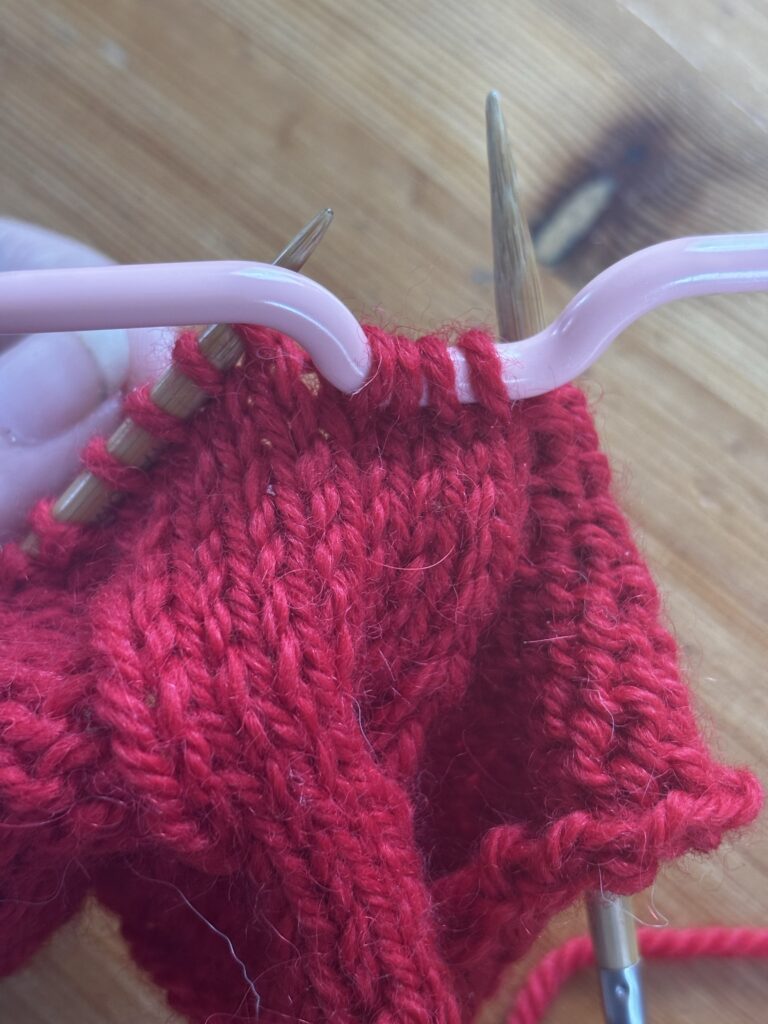
Knit the amount of stitches that is required in the pattern. Don’t worry about the stitches on hold just yet.
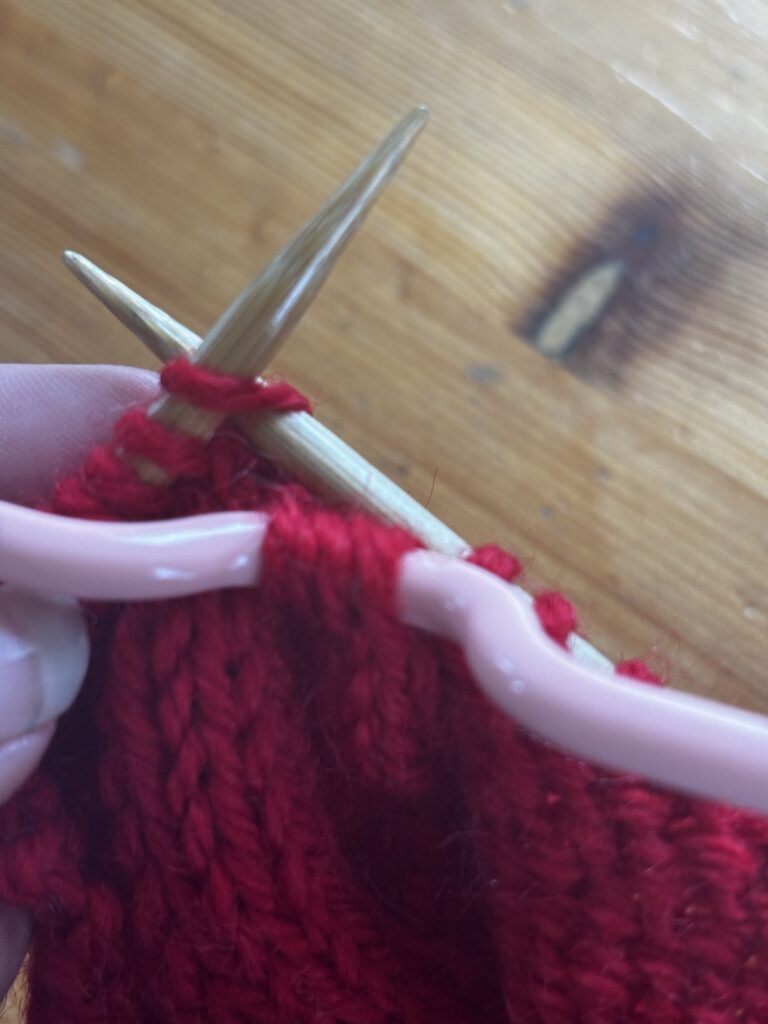
Now that you have knitted some stitches, you can knit off the cable needle. Knitting from the cable needle makes the process of knitting cables that much easier because you’re not slipping stitches back and forth.
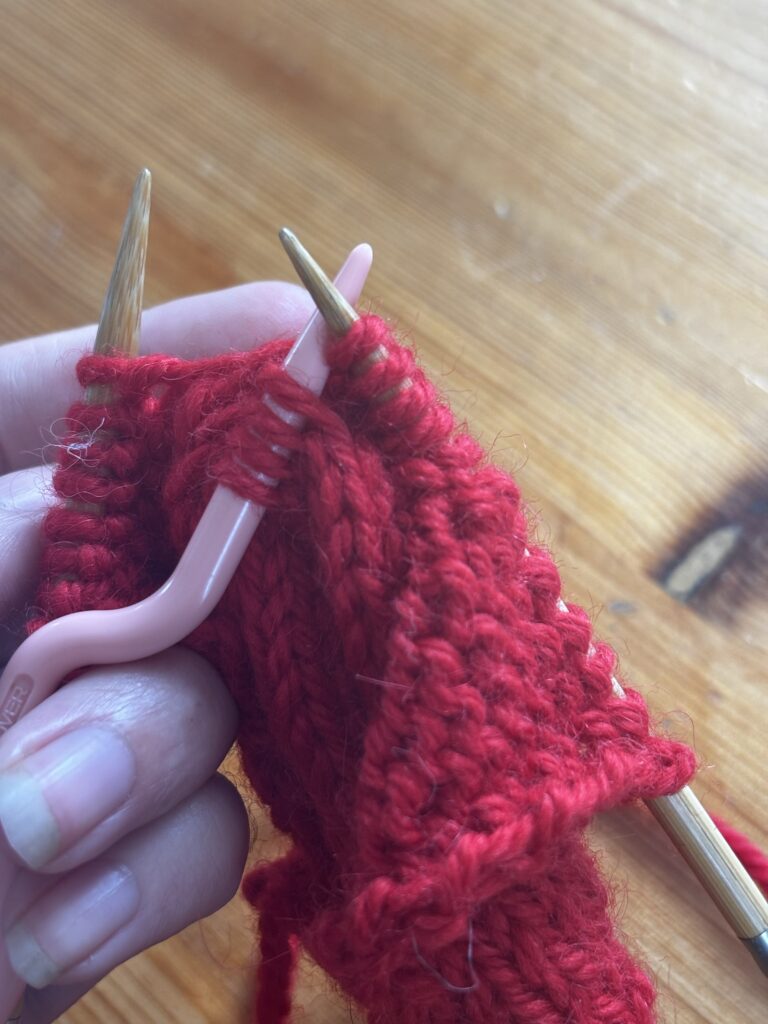
Now that you understand the concept of using a cable knitting needle, you can tackle any cable knitting pattern!
Happy Knitting!